Saturday, February 7, 2015

RTI Reading

"Congratulations! You will be teaching EIP next year," my school's literacy coach announced to me one random day in April three years ago. I had requested the position when I found out that our EIP teacher was moving to the elementary school. I was both overjoyed and terrified! In Georgia, EIP stands for Early Intervention Program. EIP is our main intervention for RTI. If you are interested in how our school does RTI/EIP, I recently did a grade level presentation on RTI/EIP. You are welcome to download the presentation I used. You can take a peek at it {HERE}. You can also view more of my RTI resources {HERE}.

So, once I had the job, my teacher empowering administration pretty much gave me free reign for how I wanted to run my classroom. It was both awesome and scary! I won't lie to you. It has been a series of trials and errors, but that is partially how RTI works. We try interventions, document success or failure, and change them accordingly. 

I was asked to make phonics my main focus, but I did not have many resources to choose from. The ones I had access to, I had issues with. BIG ISSUES! Take a look at these! 
I felt a little bit like Goldilocks trying to find the right decodable book.
 This one goes in the "too short" category!
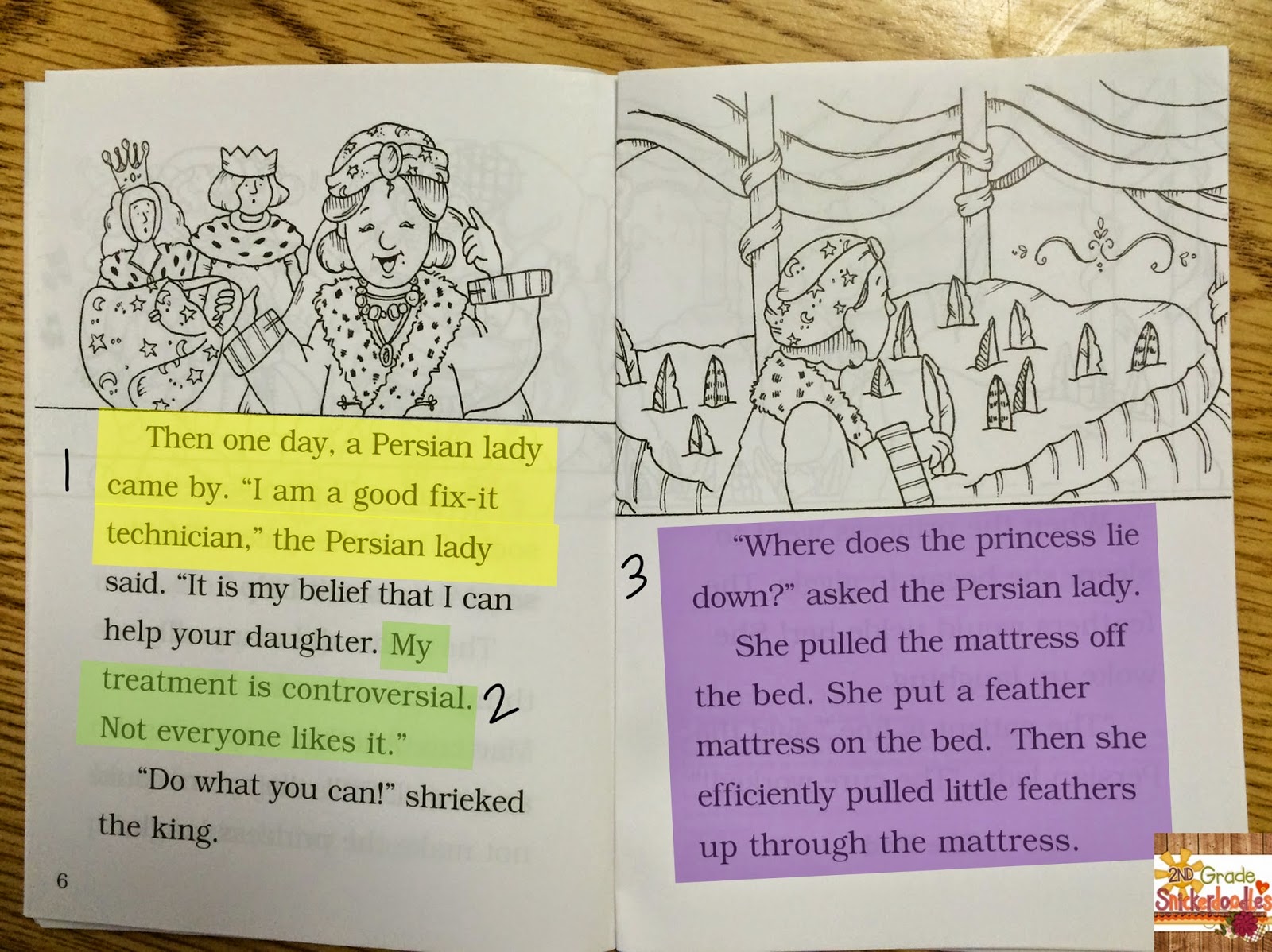
This image is from a title called...."The Efficient Persian". Yes, you read that right! Doesn't that sound like the perfect book for RTI kids? I had three big issues with this text.
1. Look at the readability here. Most of the words in these two sentences are very basic sight words and then BAM you get hit with technician and Persian! 
2. The context clues are poor or just wrong. Take a look at the word controversial. The next sentence says, "Not everyone likes it." You, as a young reader, would assume that controversial = not everyone likes it. However, not everyone likes pineapples, but pineapples are not controversial, are they? 
3. Take a quick moment and peruse the purple highlighted text. Now, tell me, what phonics skill is being practiced on this page? I am a reading teacher, and it isn't obvious to me. Why would they expect it to be obvious to 7 year olds? 

I tried some scripted curriculums. I wish I had that year of my life back! I still use them for my tier 3 kids because I am required to use a research-based program with them. I needed something different, engaging, and challenging for my tier 2 kids. I finally decided to write my own decodable readers. I now have more empathy for the authors above. It is NOT easy to write an engaging text while pulling from a list of words that share a phonetic sound. 

This last week, my students began reading "Polar Bears Past Bedtime" in their classrooms. Next, they will do a non-fiction unit on polar bears. I wanted to prepare them for vocabulary that they might see. Give them some background information so that they could contribute more in class, and I needed to work on r-controlled vowels. So, I whipped up this text called "The Arctic Circle". 

I love it because..
1. While the text has some challenging words, most of it is at a similar readability level.
2. The context clues are spot on! 
3. The phonics skill is obvious. If a student reads just these two pages, he/she has decoded 38             r-controlled vowel words!

It takes us a while to get through the text. We usually read about half of the book on Tuesday. The other half on Wednesday. On Thursday, we practice fluency and expression as we reread. Then, on Friday, they take a test on what we read. I let them have the text while they take the test so that they can use their text proof strategies. They often struggle with grammar and written expression. So, I require them to answer 10 questions in a complete sentence. 
If you would like a copy of the book and this text, click {HERE} to download your freebie. (When you make copies, just copy pages 1/2, 3/4, and 5/6 front to back. Then, stack them in order, fold, and staple.)

We also play some games. This one is called Working the Farm. Students had to decode the word to keep the card. If they missed it, the next student gets a chance at it. There are also some fun cards to make it interesting. They BEG for these games every day! We usually play it on Monday after introducing the week's skill and on Friday when they finish their comprehension test. 
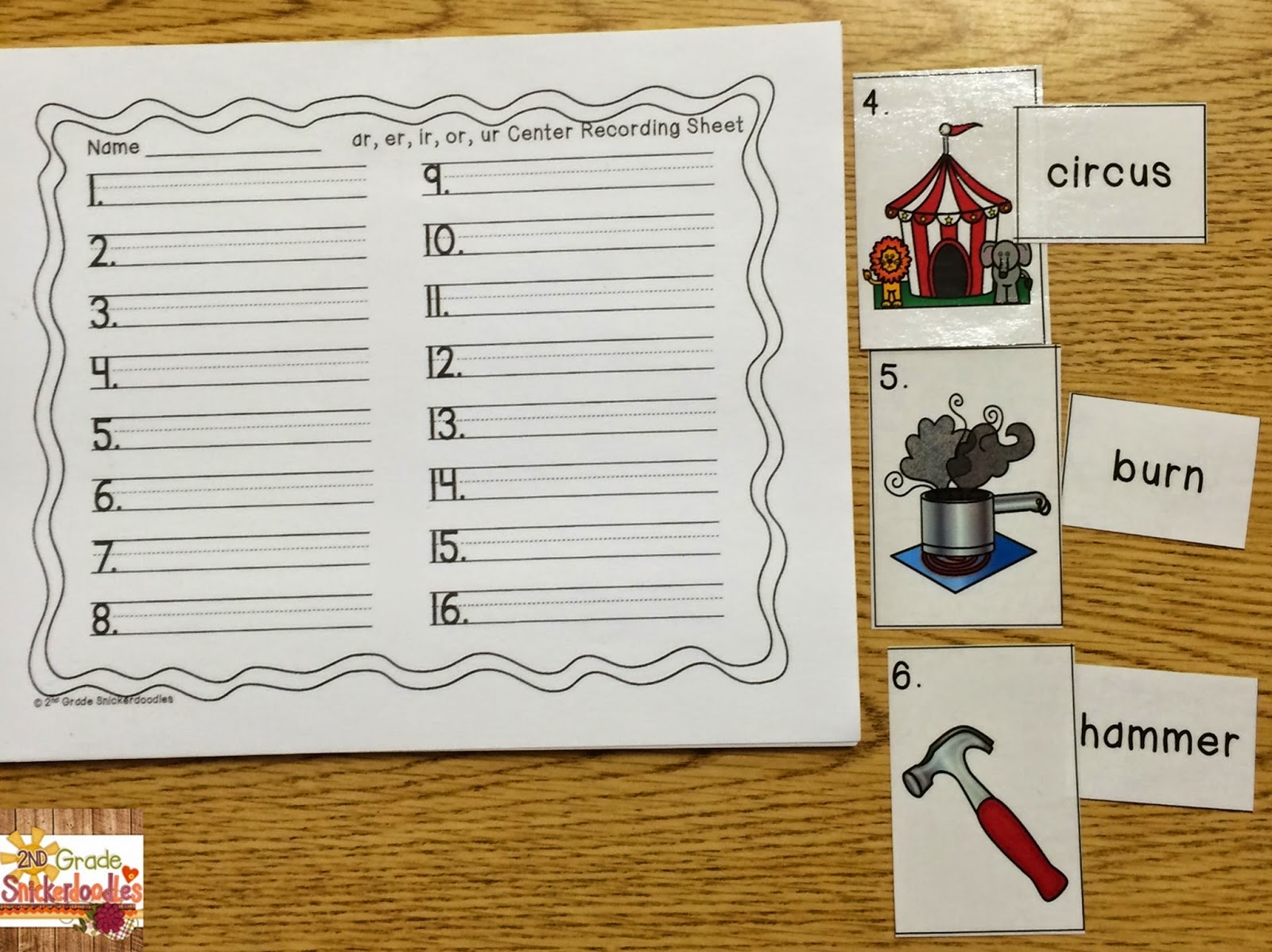
On Wednesdays, we do a segmenting/blending/spelling activity practicing the week's skill. We name the picture. We segment out each sound. As we segment, they spell the sound on their answer sheet. Then, we blend it when we have it spelled correctly. 
I have posted most of these units to my store, and I am writing more all of the time. Feel free to stop by and check them out. How do you teach with decodable readers? 

Sunday, January 4, 2015

All About Snow Giveaway

Snow, snow, snow! Do you get lots of it where you live? Here in Georgia, people completely panic and go all to pieces if there is even a chance of snow. Our kids sleep with their pajamas inside out in the hopes that doing so might magically bring the snow during the night! :) Whether you get a lot of snow or never see a single flake, your students might enjoy reading about snow. My latest product is a nonfiction text with several graphic organizers and an assessment. You can check it out {HERE} or on the picture below. You could also enter to win your own copy for FREE! This is my first giveaway here on my blog. I am crossing my fingers that I did it right. Maybe I should sleep with my pajamas inside out! :) Good luck!


a Rafflecopter giveaway

Saturday, November 29, 2014

Christmas Craft FREEBIE

Tomorrow I am going to be a substitute Sunday School teacher in my son's class. Since it will be the first day of advent, I decided to work in this craft I made last year. I was inspired by the Thanksgiving Story beads I had done for years. I thought, "Why not retell the Christmas Story using the same idea?"  You can make bracelets, ornaments, necklaces, or just retelling strings. All you need are pony beads and twine, leather, or ribbon. 

Here is a quick run down of each bead's significance.
1 blue for the land of Israel, the place of Christ's birth
1 white for the messenger angel who appeared to Mary
1 yellow for the taxes that had to paid in Bethlehem
1 brown for the stable where Jesus would be born
1 brown for the manger they laid him in
1 green for the shepherds in their fields that night
1 white for the angel who brought them glad tidings
1 white for the heavenly host who sang praises
1 black for the shepherds who made their way through the night
1 yellow for the star that shone in the sky
3 purples for the wise men who brought gifts fit for a king

I have all of the directions, story summary sheets, and a mini-coloring book to go with the bead craft available in this freebie from my store. You can grab yours {HERE} or on the picture below. 
I am linking up with Ashley Reed for her "Have Yourself a Crafty 'Lil Christmas" party. Click the button below to see more idea posts. 

Friday, November 28, 2014

The Animals' Santa by Jan Brett


Did you know that Jan Brett has a new book out for Christmas? It is called The Animals' Santa. It is the sweetest book! It is all about a hare named Little Snow. He wants to know if the animals have their own Santa. His brother and friends all talk about gifts they have received. They all have their own theories about who their Santa could be. Little Snow thinks they are all fooling him. The animals don't have a Santa, but around midnight they all find out who their Santa really is!

I love anything Jan Brett writes, and this one is sure to be a classic just like her other works! I created a book study to go along with this new book. You can check it out {HERE} or on the pic below. It is packed with meaningful activities that are directly related to the text.

Here is a quick, little Animals' Santa freebie for you, too! Click {HERE} or on the pic to download your copy. :)
I found this awesome video on Jan Brett's YouTube channel. She gives you a little tour inside of her studio. You get to meet the rabbit she used as the inspiration for her illustrations. Then, she does a step by step guide on how to draw Little Snow. I am sure you will enjoy it! 

Now, go grab your own copy of the book! You will LOVE it!

Wednesday, November 26, 2014

Main Idea and Supporting Details

Do your students struggle with identifying main ideas and supporting details? Do they have a hard time summarizing? Do they ever just give name the topic (like Sharks) when asked for the main idea? Do they pick a random fact that they found interesting instead of the true main idea?

Main idea has been the bane of my teaching career! This is one of the hardest things for kids to master because it is so complex. So, I created a set of activities that deals specifically with this set of skills. I just listed them in my store. This will be ON SALE for Thanksgiving Day 2014. You can find out more {HERE} or on the pic below. The freebie below is also in the pack.

Here is a quick sample freebie for you, too! 
Have you seen all of the awesome videos on the Almost a Third Grader channel on YouTube? This teacher is AWESOME! You can view her channel {HERE}. This video clip is an awesome introduction to main idea and supporting details.
Happy Thanksgiving to you and yours! Thanks for reading my random ramblings! :)

Monday, November 24, 2014

Executive Function: What Every Teacher Should Know

Executive Function is a growing buzz word in education. In my own school, I am hearing it more and more often. Our educational psychologist mentioned that we will all be receiving training soon. I knew that it sounded like something that could impact quite a few of my students. So, I did a little research of my own. I thought I would share my findings with you. I hope this will help you can get a jump start on helping this increasingly identified population, too. 

So, what is executive function? What difficulties do these students have? How can we help? Our school's brilliant educational psychologist explains it like this.
Imagine that your brain is an orchestra. All of the different processes you need for functioning in school are the various sections of the orchestra. Executive function serves as the conductor. It should manage the tempo or pace. It should cue and cut off certain processes with precision timing. However, if you have executive function deficits you may be expecting to conduct Pachelbel's Canon in D, but it comes out sounding like an orchestra when they are warming up to perform. Wouldn't that be terribly frustrating and discouraging?

How many students do you have that could be described in these terms? Of course, not all of them have executive function issues. Some people are lazy. Some people are messy by choice. These students do not wish to be so. They have a real disorder. Here are 3 quick examples for various ages.

Adult: I have a precious friend who has a learning disability. She also has issues with executive function. She is always a day late and a dollar short as they say. Crisis mode is her standard operating procedure. We once showed up to help her move to a new house. She and her husband were in an argument. She had not only not packed a single thing yet, but she had even forgotten to purchase the moving boxes. Nothing was packed, and it was moving day! Some other crisis or distraction had taken priority all week. 

Teenager: My own daughter has A.P.D.. You can read her story here. She also has some minor struggles with executive function. We have been able to overcome most of them, and I am so proud of her. Before she learned her coping strategies, when she was given a project in school, she would not know how to begin or divide up the task into smaller tasks. Her notebooks were a mess! She didn't know how to file anything because she could not decide where it belonged. 

Child: Whew, I might could write a book here since most of my experience is in 2nd grade RtI or Inclusion! We all have students who blurt out or make impulsive decisions! Students who when asked to write or problem solve, could stare at their blank paper endlessly. Do you have any students who cannot keep track of their pencil or folder for even five minutes? Do you have students who can spell a word right on the spelling test, but then misspell it in a sentence on the back of the test paper? How about students who have to solve the math fact every single time because they cannot recall the answer from memory? If any of these sound like a student you know, you might want to read on. :)

Wow, that is a wide variety of manifestations! Here are a few more detailed examples of things to watch out for:
A few students may struggle with ALL of these, but most of them will struggle with a few. ADD/ADHD or even misdiagnosed ADD/ADHD kids may have issues with inhibition/impulsiveness, emotional control, and self-monitoring their behavior. LD kids may struggle more with working memory, self-monitoring their thinking, and planning and organization. So, what do you do if you suspect EFD in a student or someone you know?

How can teachers help? Here is a list of recommended strategies that could positively impact all of your ADD, ADHD, LD, Autistic, or EFD students. Many of them are easy fixes, but the benefits are far reaching!
In the 21st century classroom, more and more focus is on independent or group work, problem solving, trouble shooting, and creativity. All of those skills are exceedingly difficult for students with executive function deficits. They can thrive with LOTS of guided practice and explicit directions for problem solving. You cannot assume that they understand how to implement strategies just because you taught the strategy. They have to be shown when it works, how it works, when it doesn't work, and have lots of opportunities to prove that they have moved the strategy from their flawed short term memory into their more reliable long term memory. In today's fast paced, rigorous curriculum, lots of time spent on one skill is a luxury we don't often have.
Here are some real world applications that I have tried and found to be successful at home and at school:
- Directions: Over-simplify them--the less confusion the better.
-Checklists: Make a personalized check list if necessary. (name on paper, everything answered, capital letters, punctuation, etc.)
-I have actually turned some students' desks around so that they could not access the storage under the desktop. They could not "play" inside the desk. I gave them the materials they needed for each individual task. In my small groups, I don't pass out pencils, scissors, or glue until they are needed. That way that don't lose them or get distracted by them.
-For my daughter, we create a pacing calendar when she gets a new project. We start with the day before it is due and work backward. We list every task that must be completed and schedule them on the calendar. (Purchase poster board, take notes on subject, introductory paragraph, rough draft, conclusion, draw illustrations, etc.) At first it was tedious, but now she can do these things automatically. 
-Brain break videos, Go Noodle, or even a hook/warm-up activity are great for helping students "switch gears" in their thinking from reading to math. 

If you would like to find out more about executive function, you can watch this video from Harvard University. It does an outstanding job of explaining the importance of strengthening executive function skills in young children.


I hope this has been helpful to you! I would love to find out if your school is also discussing executive function and if you have any tips to share!

Tuesday, November 11, 2014

Happy Veterans Day

Today at my school, veterans of all ages will walk the halls and be serenaded by the sweet sounds of primary school age children singing ballads of gratitude and respect. It always makes me weepy to hear their little voices singing "God Bless America" while veterans of all ages smile and try to hide their own tear filled eyes. It only takes a moment to say "Thank You", but it can mean so much.

I was reminded of a lovely moment I happened to catch when my now 13 year old daughter was only 7 years old. We were visiting with some extended family for a holiday. The family jokingly referred to its oldest member as the "old bear in his den". He was a bit of curmudgeon when the house was full of company. When he retreated into his den, you did not disturb him. However, no one had informed my little one of that policy.

She dared to boldly enter his study and she looked around at the pictures of bomber planes he flew during WWII and all of the medals he had received. I was just about to tiptoe in and retrieve her when she walked right up to him as he sat in his recliner. She said, "I wanted to tell you that I heard about you. I know that you stopped that mean old Hitler from killing people. Daddy said you flew 22 missions in those planes in your pictures. I just came in to tell you that you were brave and I love you for it." Then, that sweet little thing leaned in and kissed him on his cheek. She skipped right out of the bear's den and never even saw the tears flow down his cheeks. I did though.

Later, the bear came out of his den. He told jokes. He drank eggnog. He even danced with a certain seven year old girl. Everybody was whispering to each other saying, "He sure is in a good mood today." or "What's gotten into him?" Someone even thought that maybe the eggnog was spiked. I did not say a word. The bear was just feeling joyful about being appreciated for his service.

I hope you take a moment to appreciate the men and women you know who have served their country.  A text, an email, a phone call will just take you a moment, but it could mean the world to them. Happy Veterans Day!
