Monday, July 20, 2015

Subtraction Fact Fluency Freebie

How do you keep track of your students' fact fluency? In my 2nd grade intervention classroom, progress monitoring fluency for my math students is a major goal. So, I decided to make it fun.. like a journey..or a quest! For our addition facts, we journey through Oz as we learn each set of facts.  You can read more about that adventure and grab the program freebie in this previous post. The kids enjoyed it so much that I decided to add in a Peter Pan/Neverland theme for subtraction!

I hang up a jumbo pocket chart to hold the character cards and student name pieces. The students' names are written on die cut yellow stars. When they have achieved their goal, it gives the effect of a pictograph of names. You can see a glimpse of the set up (without the names) in this photo from an Instagram post last year. 

As soon as we introduce subtraction, I reveal the first character goal and post the character card and goal on the pocket chart. I tell the kiddos that if they meet the goal that they will earn the character and a matching treat. The character cards look like this:

All week long (and longer if needed to achieve their goal), we practice our math facts. I like to use the free subtraction fact sheets found {HERE} at www.math-drills.com. Scroll down to number 8 and select horizontally arranged subtraction questions. Then, print off an entire sheet of individual fact practice. Copy the sheet for your students, and then cut them into 4 days worth of practice strips. Easy Peasy Mac-n-Cheesy!

I set different goals for students. Often my tier 3 students are just working on getting correct differences while my tier 2 students may be more focused on correct differences in a given amount of time. If their goal is achieved, they receive the treat for their character and a little certificate in a Ziploc baggie. They take them home to share their accomplishment with their families. It is an easy and relatively inexpensive way to celebrate their work and communicate their progress to their parents. 


As you can see, I updated the font! :)
You can grab the whole program as a freebie {HERE} in this Dropbox link! 
I hope you will find these helpful! :)


Sunday, July 19, 2015

Authors in the Spotlight 3

I had such fun researching the authors in my latest update to "Authors in the Spotlight"!

Did you know that:

  • Dr. Seuss was the editor who approved the publishing of Stan and Jan Berenstain's first children's book.
  • Norman Bridwell originally wanted to name his dog character Tiny, but his wife disagreed and asked him to name the dog after her childhood imaginary friend, Clifford, instead.
  • Beverly Cleary is still alive and living in California. She will be 100 years old next April!
  • H.A. and Margret Rey were German Jews living in Paris, France when they heard that the Nazis were about to invade. They fled on makeshift bicycles. They carried only warm coats, a bit of food, and the illustrated manuscript for a book that would be published in 1941. That book was none other than Curious George. They escaped Paris only a few hours before it was overtaken! 
These fun facts and many more are in the newest version of my TPT product "Authors in the Spotlight". This set includes information on Hans Christian Andersen, Stan and Jan Berenstain, Judy Blume, Norman Bridwell, Marc Brown, Beverly Cleary, Steven Kellogg, Arnold Lobel, Robert Munsch, and H.A. & Margret Rey. 

If you have already purchased this set, go to your My Purchases Page on TPT and download the update for FREE! Click the picture above to see the full project description. 

Saturday, July 18, 2015

Sit Spots Giveaway!

I LOVE Sit Spots! I am starting my third year with my set, and they still look great! I use them every day to manage my room efficiently! You can read my original post {HERE}

The fabulous folks at Sit Spots and I would love for you to experience Sit Spots in your own classroom! So, we are teaming up to offer you a chance to win $50 in FREE Sit Spots! You can earn up to three entries just by liking Sit Spots on Facebook, following them on Instagram, and following my blog! The contest will run through Saturday, July 25, 2015. I wanted to give you plenty of time to order your Sit Spots before school starts! 


a Rafflecopter giveaway

Thursday, July 16, 2015

Addition Fact Fluency Freebie

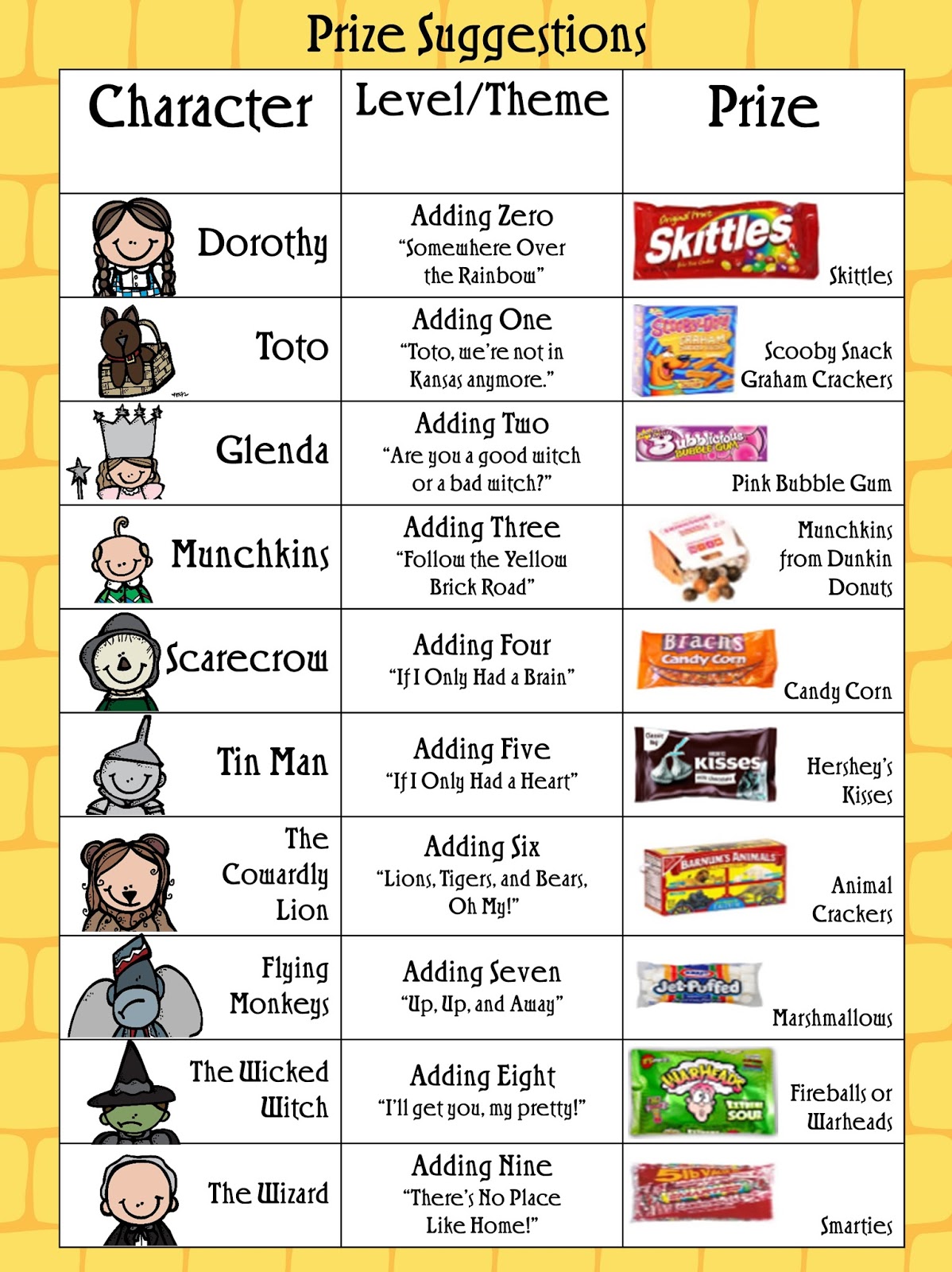
How do you keep track of your students' fact fluency? In my 2nd grade intervention classroom, progress monitoring fluency for my math students is a major goal. So, I decided to make it fun.. like a journey..or a quest! For our addition facts, we journey through Oz as we learn each set of facts.  

During preplanning I hang up a jumbo pocket chart to hold the character cards and student name pieces. The students' names are written on pieces of the yellow brick road. When they have achieved their goal, it gives the effect of a horizontal bar graph of names. You can see a glimpse of the set up (without the names) in this photo from last year's room reveal. 
Beginning the first week of school, I reveal the first character goal and post the character card and goal on the pocket chart. I tell the kiddos that if they meet the goal that they will earn the character and a matching treat. The character cards look like this:
All week long (and longer if needed to achieve their goal), we practice our math facts. I like to use the free addition fact sheets found {HERE} at www.math-drills.com. Scroll down to number 9 and select single digit addition questions with focus digits. Then, print off an entire sheet of individual fact practice. Copy the sheet for your students, and then cut them into 4 days worth of practice strips. Easy Peasy Mac-n-Cheesy!

I set different goals for students. Often my tier 3 students are just working on getting correct sums while my tier 2 students may be more focused on correct sums in a given amount of time. If their goal is achieved, they receive the treat for their character and a little certificate in a Ziploc baggie. They take them home to share their accomplishment with their families. It is an easy and relatively inexpensive way to celebrate their work and communicate their progress to their parents. 

Here is a quick glimpse at the suggested treat list and little certificates that they can earn. 

You can grab the whole program as a freebie {HERE} in this Dropbox link! If you like this set, stay tuned, or follow my blog. I hope to post my Peter Pan themed subtraction set next. :)

Monday, May 4, 2015

Just Like You

As a child, I had very few experiences with people with special needs. During the 1980's, children with special needs in my school district were bused to a special school. It was quite an insult during that time for someone to accuse you of being "retarded" or ask if you "rode the short bus".  In my neighborhood, there was a young man with special needs. Looking back now, it seems likely that he had a severe form of autism. However, as a child, we regarded him as the "Boo Radley" of our street. 

My how times have changed! Despite a rocky start, children with special needs have played an increasingly significant role in my life. I wrote about my journey as an inclusion teacher in this post.  My own children have a real heart for people with special needs. My daughter asked me to join her in volunteering with a foundation called Anchor of Hope. One Friday night a month, we provide a fun night for kids with special needs while their parents get a much needed night off to shop, eat dinner at a restaurant, or see a movie. 

This past Friday, at our volunteer dinner, we watched an amazing video on autism called "Just Like You". The video does an incredible job using young people with and without disabilities to explain the specific needs of kids with autism. They build empathy for their struggles while also explaining how to be friends with them. They have a second video that is equally as wonderful on Down Syndrome.  Please take the time to watch these videos and share them. Consider sharing them with your special education director, school counselor, or principal. These could help educate the next generation so that they will be wiser and kinder than we were. 

Autism video


Down Syndrome Video

Sunday, March 1, 2015

Inferring

Inferring is a crucial skill for young readers to practice. It may also be the most challenging skills to acquire. So often when asked how a character will respond, students tell how THEY would respond. If asked about what may happen next, they tell what they WISH would happen next. If they are reading a mystery, they read right over clues as if they were reading for a timed fluency assessment. 

My RTI kids need some intensive practice with inferring. So, I wrote up with little product that gives students an opportunity to practice making the 10 main types of inferences. They will infer:
  1. location
  2. job/hobby
  3. time
  4. actions
  5. objects
  6. cause/effect
  7. problem/solution
  8. emotions/feelings
  9. character traits
  10. meanings of unknown words
You can check it out {HERE} or by clicking the image above.

I loved the culminating activity so much that I decided to make it a freebie in my store. Students will read iPhone texting conversations to review the 10 types of inferences. Click {HERE} or on the pic below to check out the freebie.

I went searching for a great video to share with my kiddos and you all about inferring. I went to my "go to" source for instructional videos: Almost a Third Grader. OH MY WORD! She had made a video using phone conversations to teach inferences. I was stunned! I swear this a case of two minds thinking alike! I think it would be great introduction to inferring!

Hope this is helpful to you and your students! :)

Saturday, February 7, 2015

RTI Reading

"Congratulations! You will be teaching EIP next year," my school's literacy coach announced to me one random day in April three years ago. I had requested the position when I found out that our EIP teacher was moving to the elementary school. I was both overjoyed and terrified! In Georgia, EIP stands for Early Intervention Program. EIP is our main intervention for RTI. If you are interested in how our school does RTI/EIP, I recently did a grade level presentation on RTI/EIP. You are welcome to download the presentation I used. You can take a peek at it {HERE}. You can also view more of my RTI resources {HERE}.

So, once I had the job, my teacher empowering administration pretty much gave me free reign for how I wanted to run my classroom. It was both awesome and scary! I won't lie to you. It has been a series of trials and errors, but that is partially how RTI works. We try interventions, document success or failure, and change them accordingly. 

I was asked to make phonics my main focus, but I did not have many resources to choose from. The ones I had access to, I had issues with. BIG ISSUES! Take a look at these! 
I felt a little bit like Goldilocks trying to find the right decodable book.
 This one goes in the "too short" category!
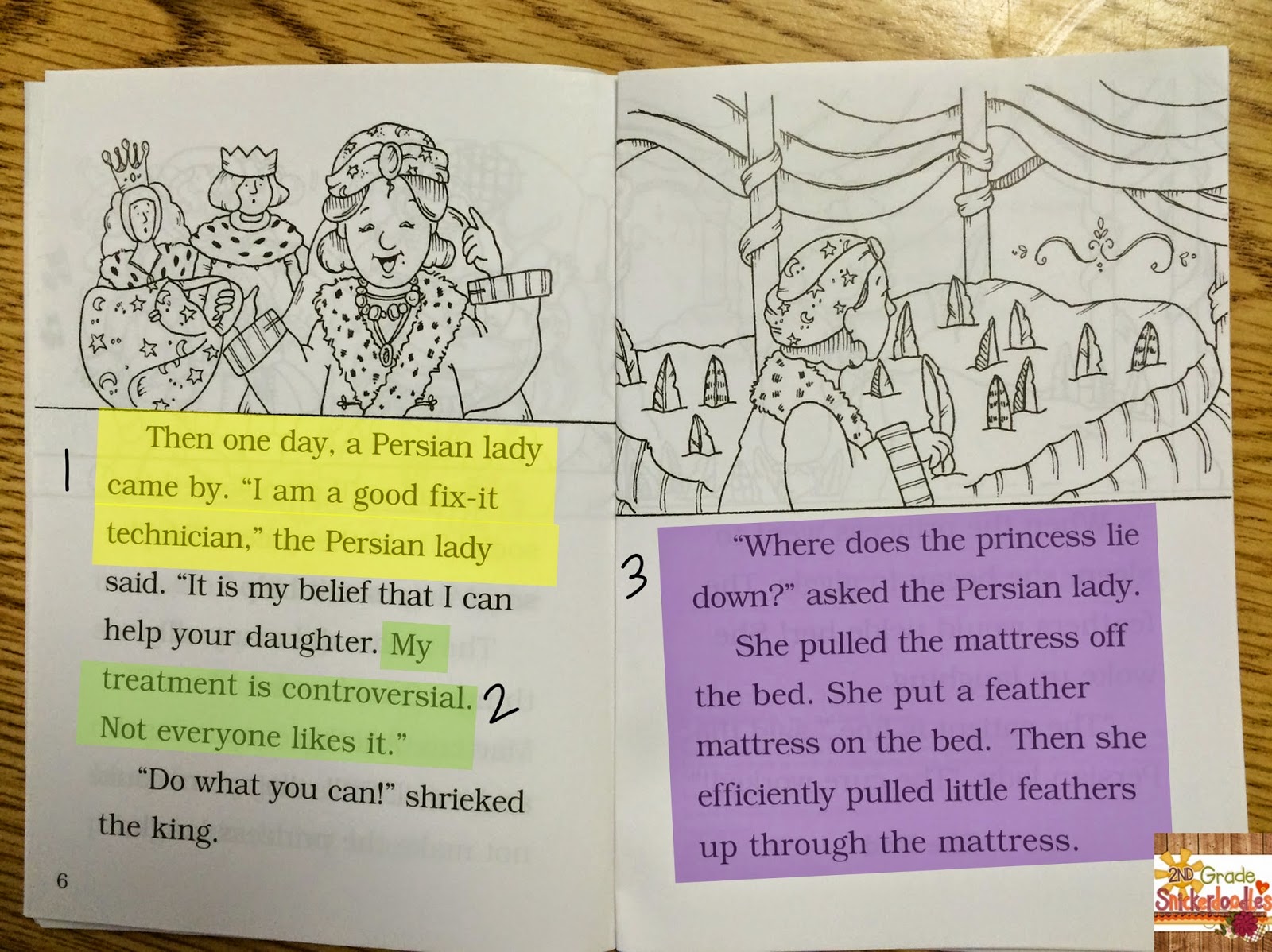
This image is from a title called...."The Efficient Persian". Yes, you read that right! Doesn't that sound like the perfect book for RTI kids? I had three big issues with this text.
1. Look at the readability here. Most of the words in these two sentences are very basic sight words and then BAM you get hit with technician and Persian! 
2. The context clues are poor or just wrong. Take a look at the word controversial. The next sentence says, "Not everyone likes it." You, as a young reader, would assume that controversial = not everyone likes it. However, not everyone likes pineapples, but pineapples are not controversial, are they? 
3. Take a quick moment and peruse the purple highlighted text. Now, tell me, what phonics skill is being practiced on this page? I am a reading teacher, and it isn't obvious to me. Why would they expect it to be obvious to 7 year olds? 

I tried some scripted curriculums. I wish I had that year of my life back! I still use them for my tier 3 kids because I am required to use a research-based program with them. I needed something different, engaging, and challenging for my tier 2 kids. I finally decided to write my own decodable readers. I now have more empathy for the authors above. It is NOT easy to write an engaging text while pulling from a list of words that share a phonetic sound. 

This last week, my students began reading "Polar Bears Past Bedtime" in their classrooms. Next, they will do a non-fiction unit on polar bears. I wanted to prepare them for vocabulary that they might see. Give them some background information so that they could contribute more in class, and I needed to work on r-controlled vowels. So, I whipped up this text called "The Arctic Circle". 

I love it because..
1. While the text has some challenging words, most of it is at a similar readability level.
2. The context clues are spot on! 
3. The phonics skill is obvious. If a student reads just these two pages, he/she has decoded 38             r-controlled vowel words!

It takes us a while to get through the text. We usually read about half of the book on Tuesday. The other half on Wednesday. On Thursday, we practice fluency and expression as we reread. Then, on Friday, they take a test on what we read. I let them have the text while they take the test so that they can use their text proof strategies. They often struggle with grammar and written expression. So, I require them to answer 10 questions in a complete sentence. 
If you would like a copy of the book and this text, click {HERE} to download your freebie. (When you make copies, just copy pages 1/2, 3/4, and 5/6 front to back. Then, stack them in order, fold, and staple.)

We also play some games. This one is called Working the Farm. Students had to decode the word to keep the card. If they missed it, the next student gets a chance at it. There are also some fun cards to make it interesting. They BEG for these games every day! We usually play it on Monday after introducing the week's skill and on Friday when they finish their comprehension test. 
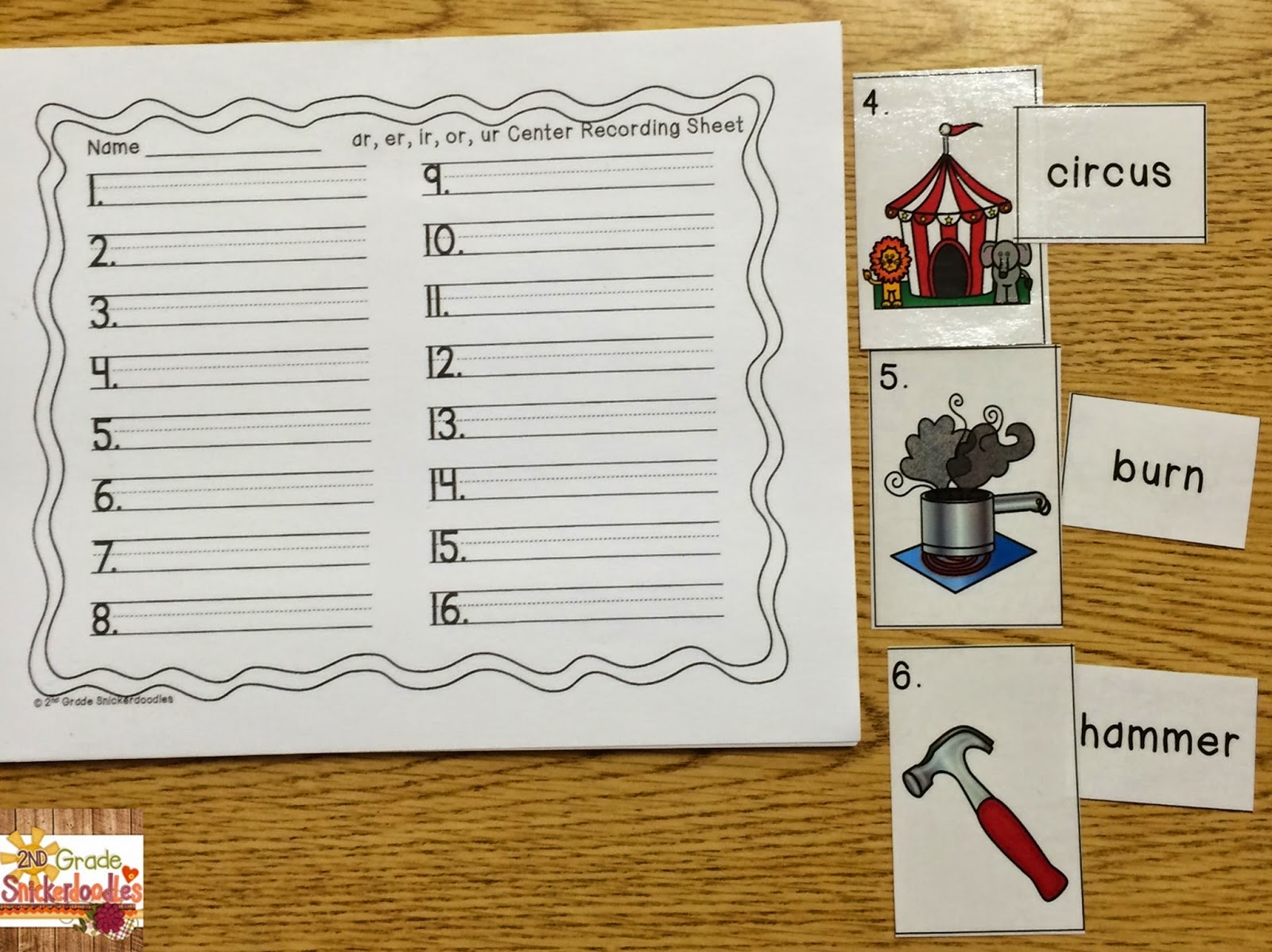
On Wednesdays, we do a segmenting/blending/spelling activity practicing the week's skill. We name the picture. We segment out each sound. As we segment, they spell the sound on their answer sheet. Then, we blend it when we have it spelled correctly. 

I have posted most of these units to my store, and I am writing more all of the time. Feel free to stop by and check them out. How do you teach with decodable readers?